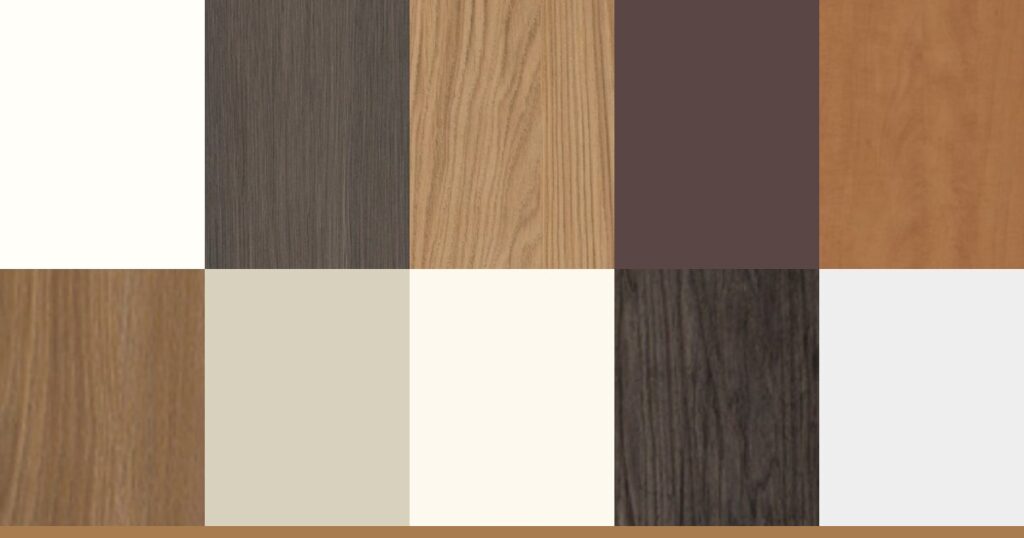
Our 2026 Arizona catalog has 584 selections, plus the Colorado Color Collection. That is great for getting exactly what you want, and it can be overwhelming. Here is the process our designers use to get clients from hundreds of options to one.
Step 1: What will stay in the room?
Write down everything that is not changing: flooring, countertops, backsplash, wall color and fixtures. Your cabinets need to work with those, so they narrow the field faster than anything else.
Step 2: Matte, gloss or woodgrain?
- Matte solids feel calm and modern and hide fingerprints well in soft-touch finishes.
- High gloss bounces light around smaller rooms and suits sleek, flat doors.
- Woodgrain adds warmth. The new Unilin Master Oak and Dosooz collections are good places to look.
See examples of each on our finishes page.
Step 3: How do I narrow to a short list?
Use the 2026 catalog browser to filter by supplier or search by color. Save no more than three or four favorites. More than that makes the final choice harder, not easier.
Step 4: Why do I need to test samples at home?
Screens and printed catalogs cannot show true color, sheen and texture. Arizona light is strong and warm, and a finish that looks grey in the showroom can look beige at 5 p.m. in your kitchen. Look at physical samples in the morning, at midday and in the evening, next to your counter and floor samples.
Step 5: Does the door style change the finish?
Yes. A woodgrain reads very differently on a Flat Panel door than on a Signature Shaker. Our five profiles are Signature Shaker, Flat Panel, Thin Shaker, Mitered Shaker and Beveled Shaker. Specialty styles have their own color lists, so check with your designer.
Can I mix finishes?
Absolutely. A common approach is a solid perimeter with a woodgrain island, or a light upper run with darker lowers. Keep undertones related, all warm or all cool, so the mix feels intentional.
Bring your flooring and counter samples to a free design consultation in Mesa or Colorado Springs and we will help you narrow it down.
Frequently asked questions
How do I pick a cabinet color?
Start with the elements that will not change, choose matte, gloss or woodgrain, narrow to three or four samples and test them in your own light at different times of day.
Should cabinets match the floor?
They do not need to match, but they should share undertones. Contrast between floor and cabinets usually looks more intentional than a near match.
Is matte or gloss better for kitchen cabinets?
Both work. Matte feels calm and hides fingerprints in soft-touch finishes; gloss reflects light and suits sleek flat doors in smaller rooms.
Can I get samples from One Source?
Yes. One Source recommends approving a physical sample before ordering. Ask your designer or visit a showroom.
Specifications and finish counts are from the One Source Cabinets 2026 Product Catalog (October 2026 revision).