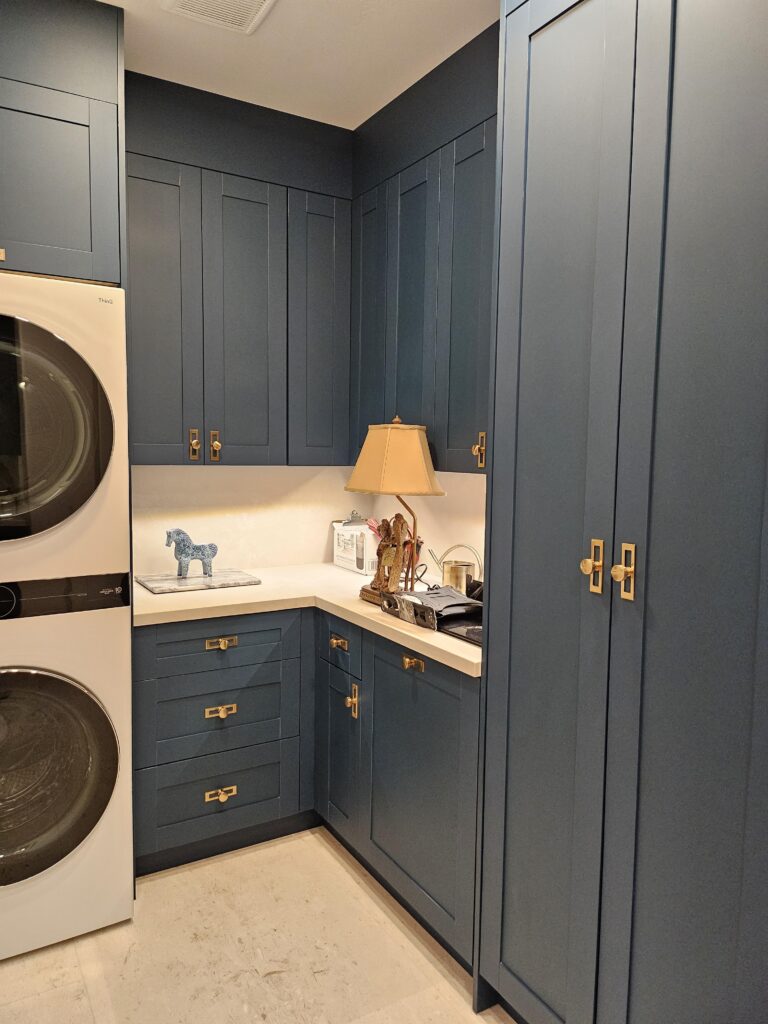
Dark wood cabinets are the single biggest kitchen trend for 2026. Walnut, espresso, and dark-stained oak are replacing the pale Scandinavian woods that dominated recent years, driven by a desire for warmth, character, and timelessness. Pair dark cabinets with light countertops, warm brass hardware, and layered lighting to create drama without heaviness.
Here’s how to get the look right.
Why Are Dark Wood Cabinets the Biggest Trend of 2026?
Dark wood cabinets are trending because homeowners are rejecting the cold, sterile aesthetic of all-white kitchens in favor of spaces that feel warm, authentic, and personal. The NKBA’s 2026 Kitchen Trends Report found that 59% of design professionals identify wood grain as a growing trend, with a clear shift away from painted finishes toward natural textures and darker tones.
Several forces are driving this:
The “lived-in luxury” movement. Homeowners want kitchens that feel curated and comfortable, not showroom-perfect. Dark wood delivers warmth and character that paint simply can’t replicate. Every knot, every grain line tells a story that a flat white surface never will.
The pendulum effect. After years of light, blonde, and white dominating kitchen design, the natural cycle of taste is pulling toward the opposite end of the spectrum. This isn’t a flash-in-the-pan reaction — it’s a recalibration toward a more balanced, timeless palette.
Material authenticity. Wood grain is inherently unique. No two walnut doors look identical. In a world saturated with mass-produced sameness, that authenticity resonates — particularly for homeowners investing in custom cabinetry built specifically for their home.
According to the 2026 Houzz Kitchen Trends Study, wood cabinets now outpace white for the first time in nearly a decade — with 29% of homeowners choosing wood versus 28% choosing white. Medium wood tones lead at 15%, light wood at 11%, and dark wood at 3% and climbing fast as the trend accelerates.
What’s the Difference Between Walnut, Espresso, and Dark Oak?
Walnut, espresso, and dark oak are the three most popular dark cabinet options for 2026, but they look and behave very differently. Walnut is a natural wood species with distinct grain character. Espresso is a stain color applied to various substrates. Dark oak is a grain-enhancing stain on oak. Understanding the difference helps you choose the right look for your space.
Walnut
Espresso
Dark Oak
Smoked Oak
| Feature | Walnut | Espresso | Dark Oak |
|---|---|---|---|
| What it is | Natural hardwood species | Dark brown stain on various woods or engineered material | Grain-enhancing dark stain on oak |
| Color range | Chocolate brown to warm purple-brown | Deep, uniform dark brown | Smoky brown with visible grain texture |
| Grain visibility | High — distinctive, flowing grain is the hallmark | Low to medium — stain often masks grain | High — stain enhances oak’s bold grain pattern |
| Undertone | Warm, with occasional purple and red | Neutral to warm brown | Warm to cool, depending on stain |
| Best style fit | Mid-century modern, organic modern, transitional | Contemporary, minimalist, traditional | European modern, rustic-modern, Scandinavian dark |
| Best for | Feature islands, full kitchens with natural light | Full kitchens, bathrooms, consistent palette | Two-tone contrast, statement islands, pantry walls |
| Price range | Higher (premium natural species) | Moderate (stain on less expensive substrate) | Moderate to high (depends on oak grade) |
| Maintenance | Moderate — natural wood needs care around moisture | Low — engineered substrates resist warping | Moderate — similar to walnut for solid oak |
If you love the look of walnut but want the durability and dimensional stability of engineered materials, ask about walnut-tone laminate finishes. At One Source, we offer woodgrain textures that capture walnut’s character without the maintenance — ideal for Arizona’s dry heat.
What Countertops and Hardware Pair Best with Dark Cabinets?
The best countertop and hardware pairings for dark wood cabinets create contrast and warmth. Light-colored countertops prevent the kitchen from feeling heavy, while warm-toned hardware (brushed brass, aged bronze, warm gold) complements the wood’s natural undertones.
Countertop Pairings
White Quartz
The safest and most popular pairing. Creates clean contrast with zero maintenance. Subtle veining adds movement without competing with the wood grain.
White Marble
The luxury option. Dramatic veining against dark walnut is stunning, but marble requires sealing and careful maintenance. Best for low-traffic kitchens.
Light Quartzite
Natural stone with the look of marble and the durability of granite. Pairs beautifully with espresso and dark oak. The NKBA reports quartzite at 61% popularity for backsplashes.
Butcher Block
Wood-on-wood works when tones differ. A lighter maple or birch butcher block on a dark walnut island creates an organic, layered look. Best used on islands, not full perimeters.
Hardware Pairings
Hardware is the jewelry of the kitchen, and it matters more than most people realize when dark cabinets are involved. The wrong metal can make a dark kitchen feel cold or dated. The right one ties everything together.
| Hardware Finish | Effect with Dark Wood | Best For | Avoid With |
|---|---|---|---|
| Brushed brass | Warm, sophisticated, the #1 pairing for 2026 | Walnut, espresso, dark oak | — |
| Warm gold / aged bronze | Rich, antique character, works in traditional and transitional | Walnut, dark oak, two-tone kitchens | Ultra-modern slab kitchens |
| Matte black | Tonal, modern, almost disappears into the wood | Espresso slab doors, minimalist designs | Very dark walnut (not enough contrast) |
| Satin nickel | Neutral bridge — works when other metals are present | Transitional kitchens mixing warm and cool | Warm-toned walnut (feels disconnected) |
| Chrome / polished nickel | Cool, high-contrast — can feel jarring | Not recommended with dark wood | Walnut, espresso, dark oak |
The general rule: if your wood has warm undertones (and walnut, espresso, and dark oak all do), your hardware should too. Brushed brass is the runaway winner for 2026 because it adds warmth and subtle luxury without competing with the wood’s natural beauty.
Want to see how dark wood finishes look with different hardware and countertop pairings? Order free finish samples and test them in your own kitchen lighting.
Should I Use Dark Wood on the Whole Kitchen or Just the Island?
It depends on your kitchen’s size, natural light, and how bold you want to go. A full dark wood kitchen creates maximum drama and works beautifully in larger, well-lit spaces. Using dark wood only on the island is a lower-risk way to introduce the trend while keeping the room bright and balanced.
Full Dark Kitchen
When dark cabinets wrap the entire kitchen — perimeter and island — the effect is immersive and dramatic. This works best in kitchens with generous natural light, high ceilings, and light-colored countertops and flooring that prevent the space from caving in. Large, open-concept kitchens handle full dark cabinetry particularly well because the surrounding living space provides visual relief.
If you’re going full dark, lighting is non-negotiable. Under-cabinet task lights (82% of designers specify them according to the NKBA), interior cabinet lights, and pendant fixtures over the island all work together to create warmth and prevent shadows from making the space feel heavy.
Dark Island, Light Perimeter
This is the most popular application of the dark wood trend in 2026 — and for good reason. A dark walnut or espresso island anchored by warm white or soft greige perimeter cabinets gives you the drama without the commitment. It defines the island as the focal point, creates visual depth, and keeps the rest of the kitchen feeling open and bright.
This two-tone approach also gives you design flexibility. If trends shift or you want a refresh five years from now, you can update the perimeter color without touching the island — or vice versa.
The Rule of Thumb
If your kitchen gets abundant natural light and has at least 150 square feet of floor space, a full dark kitchen is a strong option. If your kitchen is compact, has limited windows, or opens into a darker living space, start with a dark island and keep the perimeter lighter. Either way, balance dark cabinets with at least one major light element — countertops, backsplash, or flooring.
In Arizona homes, the intense natural light actually makes dark cabinets look better than in lower-light regions. The sun brings out the warmth and grain detail that artificial lighting alone can’t replicate. Our Mesa showroom showcases dark finishes in natural Arizona daylight so you can see exactly how they’ll look in your home.
Where Can I See Dark Finishes in Person?
You can see and touch dark wood cabinet finishes in person at One Source Cabinets showrooms in Mesa, AZ and Colorado Springs, CO. We have full-size displays in walnut, espresso, dark oak, and other dark-toned finishes alongside light options, so you can compare them side by side under real lighting conditions.
Seeing dark finishes in person matters more than with any other color family. Dark wood shifts dramatically depending on light — a walnut finish that looks chocolate brown under warm LEDs can read almost purple-black in cool fluorescent light. Photos and screens compress this range. Your eyes in your actual lighting conditions are the only reliable judge.
What to Do Before Your Visit
Bring your fixed elements. Snap a photo (or bring a physical sample) of your flooring, countertop, and backsplash materials. Dark cabinets need to harmonize with what’s already in the room, and our designers can recommend specific finishes that complement your existing palette.
Note your kitchen’s light direction. North-facing kitchens get cooler light; south- and west-facing (common in Arizona) get warmer light. This affects whether a warm walnut or a cooler dark oak will look better in your space.
Consider your door style. Dark finishes look different on Slab doors (which emphasize the material itself) versus Thin Shaker doors (which add shadow lines and frame detail). We build both styles in our Mesa and Colorado Springs facilities, and you can see both in our showrooms.
If you can’t visit in person, order free finish samples shipped to your door. We always recommend viewing samples in your own home’s lighting before making a final decision.
Frequently Asked Questions
Are dark kitchen cabinets in style for 2026?
Yes. Dark wood cabinets — especially walnut, espresso, and dark-stained oak — are the single biggest cabinet trend for 2026. Designers cite the shift away from pale Scandinavian woods toward richer, more characterful finishes that bring warmth, depth, and timelessness to kitchens.
Do dark cabinets make a kitchen feel smaller?
Not if balanced properly. Pair dark lower cabinets with lighter uppers, use reflective countertops like white quartz or marble, install under-cabinet lighting, and ensure adequate natural or task lighting. Two-tone approaches are the most popular way to enjoy dark wood without making the room feel heavy.
What hardware looks best with dark wood cabinets?
Brushed brass and warm gold hardware complement dark wood beautifully, creating a warm, cohesive look. Matte black works for a modern, tonal effect but can reduce contrast on very dark woods. Avoid cool chrome and polished nickel, which clash with the warm undertones of walnut and espresso.
What is the difference between walnut, espresso, and dark oak cabinets?
Walnut is a natural wood species with rich chocolate-to-purple tones and visible grain character. Espresso is a dark brown stain applied to various woods or engineered materials, giving a uniform, deep color. Dark oak uses a grain-enhancing stain on oak to create a smoky, dramatic finish that showcases the wood’s natural texture.
Can I get dark wood cabinet finishes from One Source Cabinets?
Yes. One Source offers dark wood finishes including walnut, espresso, dark oak, and custom stain-matched options in both Slab and Thin Shaker door styles. All cabinets are custom-built at our Mesa, AZ and Colorado Springs, CO facilities. Order free finish samples to see them in your own lighting.
See Dark Wood Finishes in Your Own Light
Order free finish samples in walnut, espresso, dark oak, and more — shipped to your door so you can see how they look in your kitchen’s actual lighting, next to your countertops and flooring.